SORN Penalties: The £80 Fine, £2,500 Fine and How to Avoid Them
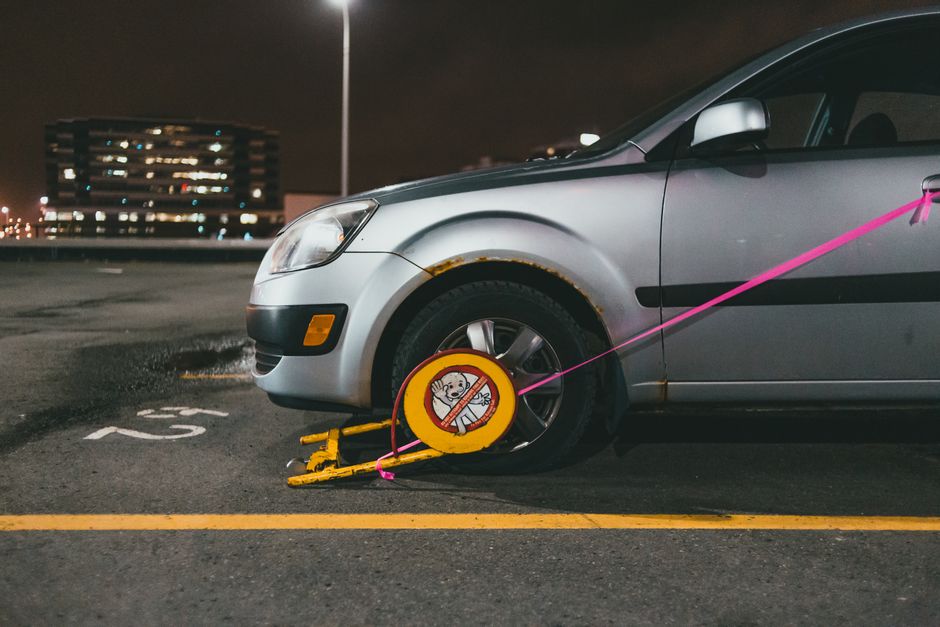
Photo by Erik Mclean on Pexels
Failing to declare a SORN when your vehicle is off the road and untaxed can trigger an £80 fixed penalty issued directly by the DVLA — and that is only the starting point for SORN penalties and fines. Ignore the notice and the matter can be referred to a magistrates' court, where the fine can rise significantly higher. Beyond the financial penalties, the DVLA has the power to clamp and seize vehicles — costs that can quickly exceed the value of older cars. This guide explains every consequence linked to SORN failures and the simple steps that will help you avoid them.
Key Takeaways
- An untaxed vehicle without a SORN declaration can trigger an £80 fixed penalty from the DVLA — issued with no prior warning.
- If the case goes to court, the maximum fine is up to £1,000 or five times the vehicle's annual road tax rate — whichever is higher. For higher-emission vehicles this can reach £2,500 or more.
- Driving a SORN vehicle on a public road is a separate criminal offence and can lead to further fines, penalty points, and immediate vehicle seizure.
- The DVLA uses automatic number plate recognition (ANPR) cameras to detect untaxed vehicles. A car kept on a driveway without a SORN is still at risk if the database flags it as unlicensed.
- Once declared, a SORN does not expire — a single declaration keeps the vehicle's status correct for as long as it remains off the road.
- You can declare SORN for free yourself directly on the GOV.UK website.
The £80 DVLA Fixed Penalty: What Triggers It?
The DVLA holds a central database of every registered vehicle in the UK, recording whether each one is currently taxed or declared SORN. When road tax expires and no SORN has been declared, the database flags the vehicle as unlicensed. The DVLA can then issue an £80 out-of-court fixed penalty automatically — there is no prior warning letter and no grace period.
This penalty applies regardless of where the vehicle is kept. A car sitting quietly in a garage or on your driveway is just as much in breach as one parked on a public road. The legal requirement under the Vehicle Excise and Registration Act 1994 is clear: every registered vehicle must hold either a valid vehicle excise licence (road tax) or a valid SORN at all times. If neither is in place, enforcement action can follow.
If the fixed penalty notice is not paid, the DVLA can refer the case to a magistrates' court. At that point, the potential consequences become considerably more serious.
How the DVLA Detects Untaxed and Un-SORN'd Vehicles
DVLA enforcement officers operate mobile units equipped with ANPR cameras that scan number plates and cross-reference them against the vehicle database in real time. Any unlicensed vehicle spotted — whether on a public road or in a publicly accessible area — can be clamped or seized on the spot. The DVLA also runs automated checks of its own records to identify vehicles whose tax has lapsed without a corresponding SORN declaration.
Members of the public can report untaxed vehicles directly to the DVLA online, providing an additional source of intelligence for enforcement teams. The combination of database monitoring and on-road ANPR means that assuming an un-SORN'd vehicle will go undetected indefinitely carries a significant risk.
When SORN Penalties Fines Rise: The £2,500 Court Fine
Under the Vehicle Excise and Registration Act 1994, keeping an unlicensed vehicle is a criminal offence. If the DVLA refers the matter to a magistrates' court, the maximum fine is £1,000 or five times the vehicle's annual vehicle excise duty (VED) rate — whichever is the greater amount.
For standard cars attracting lower annual VED rates, the £1,000 cap will normally apply. For higher-emission vehicles where the annual rate is £500 or more, the five-times multiplier can push the maximum fine to £2,500 or beyond. A court will also take into account how long the vehicle was unlicensed and any history of similar offences when determining the penalty. Court costs are added on top of any fine.
What begins as an avoidable £80 problem can become a very expensive one if it reaches court. Dealing with a vehicle's SORN status promptly is always the cheaper option.
Penalties for Driving a SORN Vehicle
Keeping an unlicensed vehicle without a SORN is one matter. Driving it on a public road is an entirely separate — and more serious — offence. As our guide on whether it is illegal to drive a SORN car explains, a SORN declaration restricts the vehicle to private land. Taking it onto a public road exposes you to multiple simultaneous offences, each carrying its own penalties.
Driving Without Valid Road Tax
Using a vehicle on a public road without a valid vehicle excise licence is an offence under the same VERA 1994 provisions. Courts generally treat active use of an unlicensed vehicle more seriously than simply keeping one off the road, and the same maximum fines — up to £1,000 or five times the annual duty rate — can apply.
Driving Without Insurance
Declaring a SORN does not automatically cancel your motor insurance policy. However, many owners choose to cancel or suspend their cover, since the vehicle cannot lawfully be driven on public roads and there is no legal requirement to insure a vehicle kept solely on private land. If you cancel your policy and subsequently drive the vehicle without arranging appropriate cover, you are committing a separate offence of driving without insurance. The fixed penalty is £300 and six penalty points on your driving licence. In court, the fine is unlimited, and the court has discretion to impose a driving ban. The vehicle can also be seized at the roadside and, in some cases, crushed if not subsequently reclaimed.
Understanding the difference between a SORN car and an untaxed car is useful context before making any decision about returning your vehicle to the road.
DVLA Clamping and Vehicle Seizure
Alongside financial penalties, the DVLA has the power to clamp or seize vehicles found to be untaxed and un-SORN'd. A release fee is payable to have a clamp removed. If the vehicle is removed to a pound, daily storage charges begin to accumulate and a separate release fee applies. If the vehicle is not reclaimed within the permitted period, the DVLA can dispose of or destroy it.
For older or lower-value vehicles in particular, the combined total of a fixed penalty, release fee, and storage charges can quickly exceed the car's market value. None of these costs arise if the vehicle's SORN status is kept current.
How to Avoid SORN Penalties and Fines
Every fine and enforcement action described above is preventable. The steps are simple and cost nothing.
- Declare SORN before your road tax expires. Do not wait for the tax to lapse. If the vehicle is coming off the road, declare SORN in advance.
- Keep the vehicle on private land. A SORN vehicle must remain on a private driveway, in a private garage, or in off-road storage. Parking on a public road — even briefly — is not permitted under a SORN.
- Retain your SORN confirmation. The DVLA issues a confirmation letter or email when your SORN is accepted. Keep it as evidence of the declaration date in case of any subsequent dispute.
- Do not drive the vehicle until you have re-taxed it and confirmed that valid insurance is in place.
- Re-tax before the first journey. Road tax must be in place before you drive — not after you arrive at your destination.
SORN Does Not Expire
Once declared, a SORN remains in place indefinitely. There is no annual renewal and nothing further to do while the vehicle stays off the road. The SORN continues until you re-tax the vehicle, sell it, or have it scrapped. A single declaration is all that is needed for long-term storage, which makes it a straightforward obligation to meet.
You can declare SORN for free yourself directly on the GOV.UK website. SORN My Car is an optional paid service that completes the paperwork on your behalf — it is not the DVLA or a government body. For a full step-by-step walkthrough of the process, see our complete SORN guide, or browse our SORN guides hub for related topics.
Declare SORN Today
If your vehicle is coming off the road and you would like the declaration handled quickly and correctly, SORN My Car can take care of it for you.
You can declare SORN for free yourself on GOV.UK. If you'd rather we handle the DVLA submission for you, SORN My Car can do it in minutes.
Start your SORN ›Frequently asked questions
If my car has been untaxed and un-SORN'd for several weeks, will the DVLA have already issued the £80 penalty?
The DVLA issues penalties based on automated database checks, which can run at any point after tax expires. It is possible a penalty notice has already been generated. Declaring SORN immediately is still the right step — it stops the situation getting worse and prevents further liability building up. If you believe a penalty was issued for a period when a SORN should have been in place, contact the DVLA with any evidence you have.
What happens if I ignore the £80 DVLA penalty notice?
Ignoring the notice does not cancel it. The DVLA can refer the matter to a magistrates' court, where the maximum fine is £1,000 or five times your vehicle's annual VED rate — whichever is greater. For higher-emission vehicles this can reach £2,500 or more. Court costs are added on top. It is far cheaper to pay the fixed penalty promptly and declare SORN without delay.
Does the £80 penalty apply even if my untaxed car never leaves my driveway?
Yes. The legal requirement to hold either a valid VED or a SORN applies to every registered vehicle regardless of where it is kept. The DVLA issues penalties based on database records, not solely on vehicles observed on public roads. Keeping a car on private land does not create an exemption from the obligation.
Can I appeal the £80 DVLA penalty if my SORN was already in place when it was issued?
Yes. If you have evidence — such as a DVLA confirmation email or letter showing the date your SORN was accepted — you can challenge the penalty notice. Contact the DVLA directly with your documentation. This is one of the practical reasons why retaining your SORN confirmation as soon as it arrives is worthwhile.
Will a court conviction for keeping an unlicensed vehicle give me a criminal record?
A conviction in a magistrates' court for keeping an unlicensed vehicle is a criminal conviction and will appear on your record. It is not typically recorded as an endorsement on your driving licence in the same way as offences such as speeding, but it remains a criminal matter. If you are facing prosecution, seeking independent legal advice is advisable.
If the DVLA clamps my car as well as issuing a fine, do I have to pay both?
Yes. Clamping and financial penalties are separate enforcement actions. A release fee applies to have the clamp removed, in addition to any fixed penalty already issued. If the vehicle is removed to a pound, daily storage charges also accumulate and a separate release fee applies. All of these costs are on top of — and separate from — any court fine for the underlying unlicensed status.