Do You Need to SORN a Car Kept on Private Land or a Driveway?
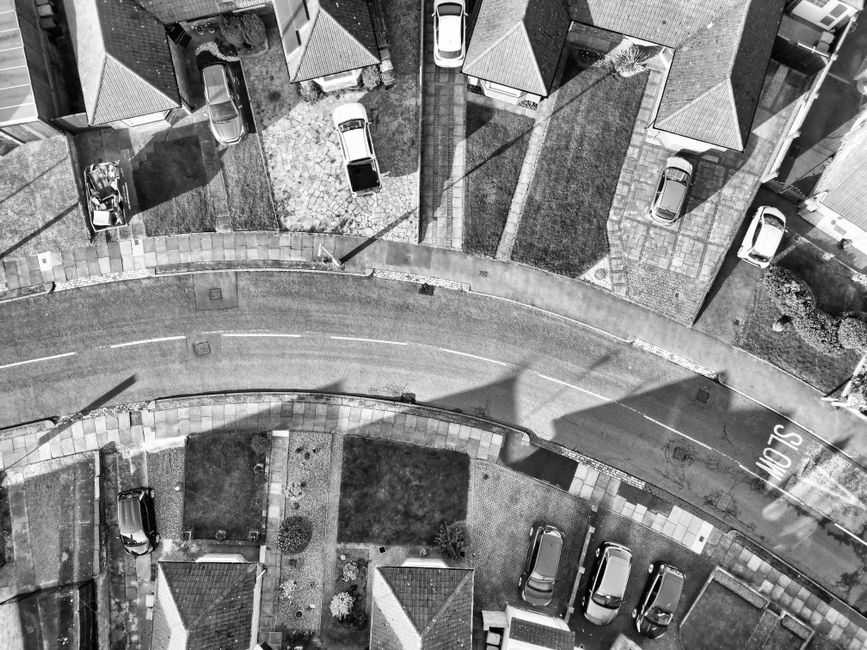
Photo by Altaf Shah on Pexels
If your car is sitting untaxed on your driveway, in a garage, or anywhere else on private property, you do still need to declare a SORN. The requirement to either tax or SORN a vehicle applies to every registered vehicle in the UK — the DVLA does not make an exception based on where the car is kept. Keeping an untaxed car on private land without a SORN is a legal offence that can result in an automatic penalty.
This surprises many drivers, who assume that parking off the road removes the obligation. It does not. Location affects only whether you can drive the vehicle — not whether you need tax or SORN to keep it.
Key takeaways
- You must SORN any untaxed vehicle registered with the DVLA, even if it is on private land.
- Your driveway, garage, lock-up, field, or private yard does not exempt you from the SORN rule.
- SORN is free to declare and can be done online in minutes directly on GOV.UK.
- An untaxed, un-SORN’d vehicle can attract an automatic £80 penalty from the DVLA — even if no one can see it from the road.
- Once SORN is declared, you cannot drive the vehicle on any public road without first re-taxing it.
- SORN My Car is an optional paid service that completes the paperwork for you — it is not the DVLA or an official government body.
Why does “do I need to SORN a car on private land” confuse so many drivers?
The confusion is understandable. Many drivers assume that as long as a car is not causing an obstruction on a public road, it can be left untaxed without consequence. That has never been the case in law.
Under the Vehicle Excise and Registration Act 1994, every vehicle registered with the DVLA must at all times either hold valid vehicle excise duty (road tax) or have a Statutory Off Road Notification — a SORN — in place. There is no third option. The location of the vehicle is irrelevant to this obligation.
The DVLA cross-references its vehicle database with tax and SORN records on a continuous basis. If your vehicle has no current tax and no current SORN, an automatic penalty notice can be issued regardless of whether the car is visible from the street or tucked away behind a gate.
What counts as private land for SORN purposes?
In practice, private land means any area that is not a public road. Common examples include:
- Your driveway or front garden
- A private garage or lock-up
- Farmland or agricultural land you own or rent
- An off-street car park on private property
- A shared private road that is not adopted by the local authority
- Commercial storage yards or private compounds
None of these locations exempt you from the need to SORN an untaxed vehicle. The rule is simple: no tax and no SORN means a penalty is possible, wherever the car sits.
What about unadopted roads and shared private drives?
Some residential streets and estate roads are privately maintained and not adopted as public highways. Even if your car sits on such a road, you are still expected to have valid tax or a SORN declared. If there is any doubt about whether a road is legally public or private, declaring SORN is always the safer choice — it costs nothing and removes any uncertainty.
What happens if you keep an untaxed car without SORN on private land?
The DVLA can issue an automatic out-of-court settlement for an untaxed and un-SORN’d vehicle. This is typically an £80 penalty notice. If the penalty goes unpaid and the matter proceeds further, the fine can be considerably higher.
In addition, the DVLA has the power to clamp and remove vehicles that have no tax and no SORN, even when they are on private land. This is not common, but it does happen — particularly with vehicles that have been flagged as persistently untaxed over a long period.
If you are unsure whether your specific situation requires a SORN — for example, if you have recently let the tax lapse or inherited a vehicle — our complete SORN guide walks through every scenario in plain language and covers the paperwork step by step.
Do I need to SORN a car on private land if I plan to sell it?
Yes — until the vehicle is transferred to a new keeper, you as the registered keeper are responsible for ensuring it has either valid tax or a SORN. If you plan to sell a car that is currently untaxed and stored on your property, you should have a SORN in place in the meantime to avoid a penalty while it sits unsold.
When the new keeper takes ownership and re-taxes the vehicle (or declares their own SORN), your responsibility ends. The DVLA updates its records when the V5C transfer section is completed and sent in.
How to declare SORN for a car kept on private land
Declaring SORN is straightforward and works in exactly the same way whether your car is on the road or on your driveway. You have three options:
- Online at GOV.UK — the quickest method, available at any time of day
- By phone on 0300 123 4321, using the DVLA’s automated SORN line
- By post using form V890
You will need your vehicle’s registration number and a reference number from your paperwork. The 11-digit number from your V5C logbook makes SORN effective immediately. The 16-digit number from a V11 reminder letter takes effect from the first day of the following month.
You can declare SORN for free yourself directly on the GOV.UK website — this is always an option. SORN My Car is an optional paid service that completes the paperwork on your behalf, which some drivers find helpful when they want a guided, checked process rather than navigating GOV.UK directly.
For answers to a wider range of SORN questions, browse our SORN guides section, which covers common situations from storing a classic car to dealing with a non-runner.
What about driving off private land onto a public road?
Once SORN is declared, the vehicle must not be driven on a public road without first being re-taxed. This applies even for very short distances — reversing off a driveway, moving the car a few metres along a road, or driving briefly to a nearby garage all count as using a public road and are not permitted under SORN.
There is a narrow legal exemption that allows a SORN vehicle to be driven directly to and from a pre-booked MOT test, but this applies in specific circumstances only. For a full explanation of when you can and cannot use a SORN car on the road, read our guide on whether it is illegal to drive a SORN car, which sets out the penalties and exceptions in detail.
Does a non-runner stored on private land still need SORN?
Yes. As long as a vehicle is registered with the DVLA and has not been formally scrapped — with an official Certificate of Destruction issued by an authorised treatment facility — it must have either valid tax or a current SORN. Being a non-runner or permanently off the road is not a legal exemption in itself.
If the vehicle is genuinely beyond economical repair, the correct course is to hand it to a licensed scrap dealer who will issue a Certificate of Destruction and notify the DVLA. Until that point, declaring SORN is the right step.
Summary
The answer to whether you need to SORN a car on private land is an unambiguous yes. Whether the vehicle is on a driveway, in a garage, on farmland, or in any other off-road location, an untaxed registered vehicle must have a SORN declared. The DVLA’s enforcement is based on its own records, not on whether a car is visible from a public road.
Declaring SORN is free and takes only a few minutes. If you would prefer a straightforward, guided experience, SORN My Car can handle the declaration for you — simply enter your vehicle’s registration to get started.
You can declare SORN for free yourself on GOV.UK. If you'd rather we handle the DVLA submission for you, SORN My Car can do it in minutes.
Start your SORN ›Frequently asked questions
My car has been sitting untaxed on my driveway for several months without a SORN — will I receive a fine automatically?
Potentially, yes. The DVLA’s systems flag vehicles that have neither valid tax nor a current SORN, and an automatic penalty notice can be issued without any prior warning. If your vehicle is currently in this situation, you should declare SORN as soon as possible. Doing so will not cancel any penalty already issued, but it will stop further liability building up.
Does keeping my car in a locked private garage mean the DVLA cannot detect it is un-SORN’d?
No. The DVLA does not detect untaxed vehicles by seeing them — it identifies them by cross-referencing its own registration database with tax and SORN records. A vehicle stored out of sight in a garage is just as visible to the DVLA’s systems as one parked on the street. Physical concealment offers no legal protection.
I have just bought a car that was stored on private land with no tax and no SORN — what should I do straight away?
As soon as you become the registered keeper, the responsibility for taxing or SORNing the vehicle passes to you. You should declare SORN immediately if you do not intend to tax and drive the car right away. You will need to update the V5C logbook with your details and notify the DVLA of the change of keeper at the same time.
Does a SORN declaration ever expire if my car remains on private land indefinitely?
A SORN does not have a set expiry date — it stays in place until you tax the vehicle, sell it, or scrap it. You do not need to renew SORN annually. However, if you re-tax the vehicle and then let the tax lapse again without re-declaring SORN, the protection ends and the vehicle becomes unlawfully untaxed.
Can the DVLA legally clamp or remove a vehicle from my private driveway if it has no SORN?
Yes, the DVLA does have powers to clamp and remove vehicles from private land in certain circumstances, although this is not a routine action. It is more likely to occur where a vehicle has been untaxed and un-SORN’d for a significant period and multiple attempts to contact the registered keeper have been made. Declaring SORN promptly removes this risk entirely.
If my car is kept on a private field or agricultural land rather than a driveway, does the same rule apply?
Yes, exactly the same rule applies. The SORN requirement is based on the vehicle’s registration status with the DVLA, not on the specific type of private land where it is kept. A car stored in a field, on a farm, or in a rural outbuilding must still have valid tax or a current SORN if it is registered with the DVLA.